Search

As we move steadily toward a world where physical currency fades into memory, credit cards remain at the heart of our digital transactions. This article explores how cards adapt, coexist and even thrive alongside emerging payment rails in a truly cashless ecosystem.
In its simplest form, a cashless society is one where everyday transactions occur without paper money or coins. Instead, consumers rely on credit and debit cards, digital wallets, real-time account-to-account (A2A) transfers and even wearable devices.
However, cashless does not necessarily mean card-only usage. A holistic model includes:
Promoting an inclusive cashless society ensures that everyone—from the underbanked to tech-savvy consumers—can participate in the digital economy.
Global data reveal contactless and digital payments soaring to unprecedented levels. In 2024, contactless methods represented 42% of all card transactions worldwide, totaling US$10.4 trillion over 456.6 billion operations. Europe led the charge at 71% adoption, while the Americas reached 36%.
Digital wallets surged simultaneously. In 2023, 30% of point-of-sale payments flowed through mobile or online wallets, worth US$13.9 trillion. By 2030, industry forecasts expect wallets to command US$28 trillion globally, with smartphones enabling half of all in-store purchases.
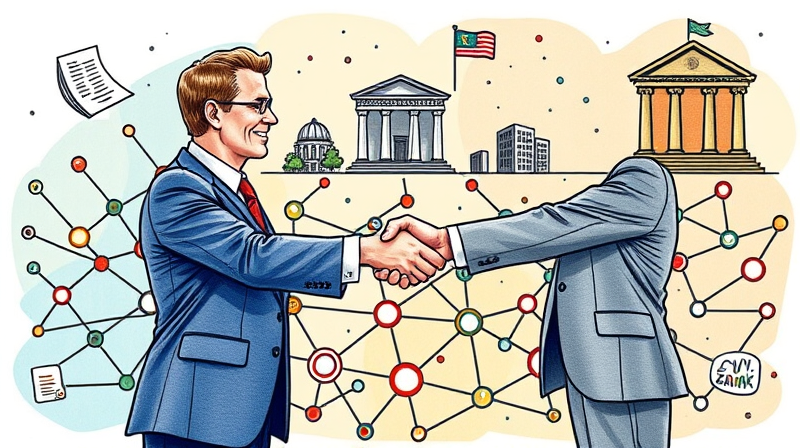
This illustration underscores how payment rails diversify, with cards remaining a cornerstone while wallets and real-time transfers accelerate.
Credit cards have long served as the backbone of digital payments. They fund mobile wallets, back recurring subscriptions and underpin many e-commerce checkouts. Nevertheless, their role is evolving in three key ways:
As cards become more than plastic—migrating into digital tokens, virtual cards and wearables—their fundamental function as a trusted funding source persists.
Issuers must navigate shrinking interchange revenues amid fierce competition from real-time schemes and wallet providers. To remain relevant, they are investing heavily in data analytics, AI-driven personalization and value-added services like instant credit decisions.
Merchants face pressure to support multiple rails while balancing transaction fees. Many now deploy unified commerce platforms that accept cards, mobile wallets and account transfers at a single terminal, simplifying reconciliation and improving checkout conversion.
Consumers benefit from increased choice and flexibility. They can split payments across cards, wallets or even biometric-enabled wearables. However, they also confront digital fatigue, security concerns and potential exclusion if cash options disappear too quickly.
Inclusion remains a central pillar of a sustainable cashless transition. Solutions like cash-to-card kiosks, anonymous prepaid cards and localized mobile payment apps help bridge the divide for the unbanked and underbanked.
Regulators worldwide are crafting balanced rules to foster innovation while controlling fraud and money laundering. Real-time transaction monitoring, strong customer authentication and open banking standards all play a part in safeguarding a cashless ecosystem.
Behavioral studies show that convenience often outweighs security fears—until a breach occurs. Consumers value frictionless checkouts but demand transparency over data usage and robust safeguards against identity theft.
Building long-term consumer trust hinges on educating users about digital literacy, offering easy-to-use controls and ensuring that support is available for every demographic group.
Artificial intelligence is powering predictive fraud detection, dynamic risk scoring and personalized offers. Embedded payments in IoT devices—from connected cars to smart appliances—hint at a future where transactions occur invisibly.
Possible scenarios for 2030 include:
Yet even in a world of invisible payments, credit cards will endure as a vital credit instrument and a trusted backstop for consumer protection.
The journey toward a cashless society is not a zero-sum game. Credit cards, digital wallets and real-time A2A networks will coexist, each serving unique consumer needs. By fostering inclusion, embracing innovation and maintaining strong safeguards, we can build a future where payments become truly seamless, secure and accessible to all.
As issuers, merchants and consumers adapt, one principle remains constant: trust in the payment rails that underpin our digital economy. Embracing this change thoughtfully will ensure that no one is left behind.
References