Search
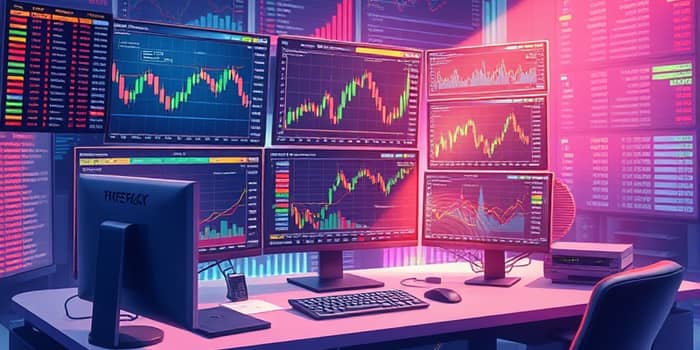
Market scanners unlock the power to sift through thousands of symbols and reveal hidden prospects. By applying focused filters and automated analysis, traders can seize timely moves and maximize returns.
Market scanners are software tools designed to screen and rank equities, ETFs, and other instruments against predetermined metrics. Whether you trade intraday or hold positions for days, these platforms empower you to identify high-potential stocks in real-time instead of manually combing through hundreds of charts.
Scanners rely on technical patterns, volume anomalies, and fundamental benchmarks. By customizing scan criteria, you can filter for price breakouts, momentum shifts, and undervalued opportunities across global exchanges.
Understanding scanner categories helps tailor your approach to specific trading styles.
Implementing a methodical workflow can significantly boost scan efficiency and signal quality.
The 2026 landscape offers a variety of scanners, each with unique strengths ranging from AI integration to visual mapping.
Other notable names include TC2000, Scanz, MOMO Pro, Stock Rover, and TrendSpider, each offering sophisticated AI-driven screening tools and custom integrations.
Refine your scans by focusing on measurable metrics:
Once your scanner delivers results, apply these tactics to turn signals into profits:
Day traders can focus on the largest percentage movers combined with volume spikes or reversal patterns. Swing traders may scan at EOD for oversold pullbacks in established uptrends. To capture breakouts, target opening range breakouts and price consolidations confirmed by volume.
Risk management remains paramount. Tailor stop-loss levels based on volatility, and avoid overloading scans with conflicting criteria that increase false positives. By targeting high-probability trading setups with confidence, you can improve win rates and reduce emotional decision-making.
The next frontier involves deeper AI integration and alternative data sources. Natural language queries will enable traders to describe strategies in plain English and receive instant scan configurations. Advanced sentiment analytics—drawn from social media, news feeds, and corporate filings—will become standard filter options.
Despite exciting innovations, limitations persist. Data subscription caps and latency issues can hamper intraday performance. Always verify scan results with chart analysis and maintain backup strategies in case of data disruptions.
Market scanners have evolved into indispensable tools for modern traders. By mastering setup processes, refining quantitative criteria, and leveraging top platforms, you can consistently uncover your next big opportunity.
Whether you seek rapid breakouts or long-term swing ideas, a disciplined scanning routine combined with rigorous backtesting will sharpen your edge. Embrace these technologies, stay adaptable, and let market scanners illuminate the path to trading success.
References