Search
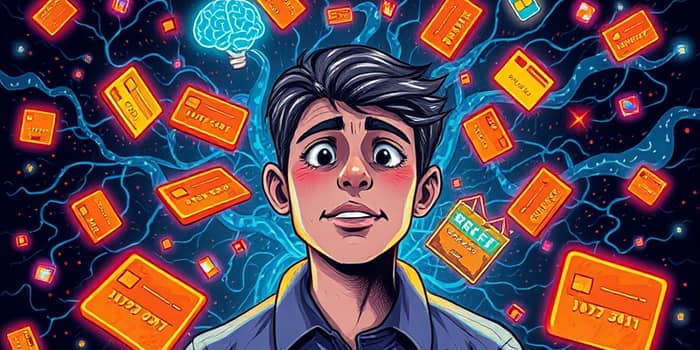
In today’s digital economy, the simple act of tapping a card or clicking a button can feel inconsequential, yet it carries profound psychological weight. From the thrill of new purchases to the shock of a monthly bill, credit cards transform the way we perceive and manage money.
This article delves into the core mechanisms that anesthetize the pain of paying, exploring how reward circuits, emotional triggers, and mental shortcuts collectively steer our spending behavior. By understanding these drivers, you’ll gain insight and practical strategies to spend intentionally and avoid common pitfalls.
When you hand over cash, the loss feels immediate and visceral. Physically parting with bills creates a strong sense of restraint. Credit cards, by contrast, introduce a time gap between purchase and payment—a phenomenon called payment coupling. This delay makes the cost feel abstract, postponing discomfort until the statement arrives.
Research shows that cards can release the brakes that restrain spending, allowing consumers to buy more without noticing the growing balance. The absence of physical money creates a psychological buffer: swiping or tapping triggers no visible outflow, so it’s easier to focus solely on the pleasure of consumption.
Beyond removing discomfort, credit cards actively stimulate the brain’s reward centers. Neuroimaging studies reveal that swiping or tapping a card can activate dopaminergic reward circuitry in regions like the striatum. These are the same pathways linked to addictive behaviors, reinforcing the urge to spend more whenever the card is used.
Over time, cues associated with card use—logos, digital checkout buttons, and the motion of a card slide—become conditioned triggers. Much like the aroma of baking pastries can provoke cravings, these cues prime the brain for the anticipated reward, making impulse purchases more enticing.
Credit cards cater to our tendency for instant rewards. By separating the acquisition of goods from payment, they exploit present bias—our inclination to favor immediate pleasures over future costs.
This combination can fuel impulsive purchase decisions, especially when the excitement of a new purchase overshadows long-term financial considerations.
Emotions play a pivotal role in credit card spending. Stress, boredom, sadness, or even celebration can drive users to swipe their cards to regulate mood. Retail therapy offers a quick dopamine boost, temporarily alleviating discomfort.
Without the immediate barrier of cash on hand, individuals can satisfy these emotional urges in a split second. Social pressures and comparison—seeing peers flaunt new gadgets or vacations—can further amplify spending, as cards make it effortless to keep up with others’ lifestyles.
Credit card companies use psychological levers to turn spending into a game. Points, miles, and cash back rewards tap into our competitive instincts. Limited-time bonuses and tiered systems create a sense of urgency that triggers fear of missing out (FOMO).
This interplay between dopamine-driven rewards and FOMO can lead consumers to make unnecessary purchases, convincing themselves they are “saving” by spending more.
Mental accounting describes how people categorize funds differently depending on their source and form. Credit card balances often feel like a revolving fund separate from everyday budgets, weakening spending controls.
Moreover, digital payments are inherently abstract. Studies indicate that the average non-cash transaction is over five times the value of a cash transaction. When money doesn’t physically leave your hand, it’s easier to disconnect from the true cost of an item.
Robust research confirms that credit cards increase both willingness to pay and actual expenditure. Experimental studies reveal that participants are willing to pay up to 100% more when using cards versus cash. Tipping experiments show card users tip around 4.3% more, and overall spending can rise by 12–18%.
These figures illustrate how the abstraction and reward dynamics of credit cards translate into significantly higher spending in real-world settings.
Awareness of these psychological forces is the first step to mindful spending. By implementing simple tactics, you can mitigate the hidden influences of credit cards and build healthier financial habits.
These measures introduce small “speed bumps” that restore friction and help you reconnect with the real cost of each transaction.
Credit cards offer convenience and valuable perks, but their design leverages deep-seated psychological mechanisms that can lead to overspending. By understanding how they reduce pain, amplify rewards, and exploit biases, you gain the power to spend more deliberately. Implementing practical strategies can help you enjoy the benefits of credit cards while maintaining financial well-being and control.
References