Search
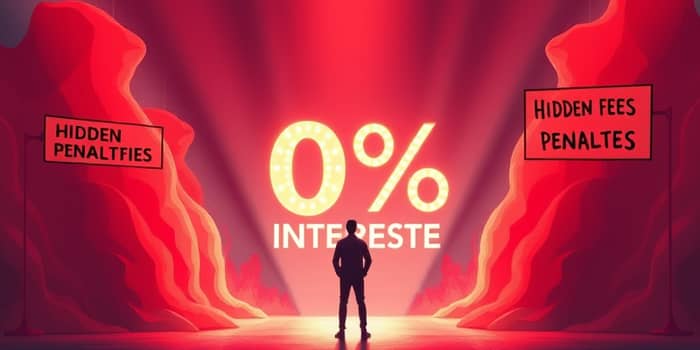
It sounds like a dream: borrowing money and paying back only the principal, without a single penny of interest. Yet in practice, many zero-interest deals come with hidden traps that can turn a cost-free promise into a financial nightmare.
Before you sign on the dotted line, it’s vital to understand how these offers work—and where the true costs lie.
At their core, zero-interest loans simplify your repayment by charging no interest during a promotional period. Common examples include buy now, pay later (BNPL) plans, 0% APR credit cards, dealer financing, and small personal advances. These options let you break purchases into interest-free installments—if you adhere strictly to the terms.
Zero-interest offers often conceal additional charges that offset the lack of interest revenue for lenders:
Even a single late payment can incur a sizable fee and trigger high fees and retroactive interest on any remaining balance.
Not all “no-interest” deals are created equal. With deferred interest, the lender calculates interest behind the scenes—often at rates above 20%—and then suspends it until the end of the promotional period. Miss the deadline, and you owe all the interest accrued during the entire period, not just on the outstanding balance.
By contrast, a genuine 0% APR offer means no interest accrues at all during the promotional phase. If you haven’t fully paid off the balance by the end, you’re charged interest only on what remains—and only going forward.
Failing to meet payment deadlines can instantly void your zero-interest deal. Consequences include:
Short repayment schedules amplify the risk. Many offers require full repayment within six to twenty-one months, while car financing may extend to forty-eight months but still carries severe penalty terms.
Advertised 0% APR deals often apply only to “qualified” applicants. Typical requirements include:
If you fall short, the lender may impose a standard interest rate or deny your application altogether—turning what looked like free financing into an outright rejection.
Choosing zero-interest financing can sometimes close the door on other savings. Dealerships and retailers often reserve their best price reductions or cash rebates for customers who pay cash or secure an outside loan.
In certain cases, a modest interest rate combined with a sizable rebate can yield a lower net cost than 0% financing without any additional incentives. Always compare the total outlay—interest, fees, and discounts—before deciding.
Buy now, pay later services like Afterpay and Klarna make purchases feel almost free in the moment, encouraging impulsive spending. Repaying multiple BNPL plans on different schedules can become a juggling act, leading many consumers to transfer balances to high-rate credit cards.
Research shows that transferring an unpaid BNPL balance to a credit card can incur annual interest rates exceeding 20%, quickly transforming what seemed like a risk-free plan into a costly debt spiral.
To illustrate the impact of a single missed payment, consider a $1,000 zero-interest loan with a six-month term:
Instead of paying $1,000, you would owe approximately $1,065—an unanticipated expense triggered by one missed payment.
Zero-interest loans can be advantageous for disciplined borrowers with realistic repayment plans. They offer quick access to funds without interest, allowing you to stretch purchases over time without finance charges—provided you pay on schedule and avoid fees.
Before committing, ask yourself:
If you can confidently check these boxes, a zero-interest loan might be a smart tool in your financial toolkit. Otherwise, a traditional low-interest loan or cash payment with negotiated discounts may be the safer, more cost-effective route.
References