Search
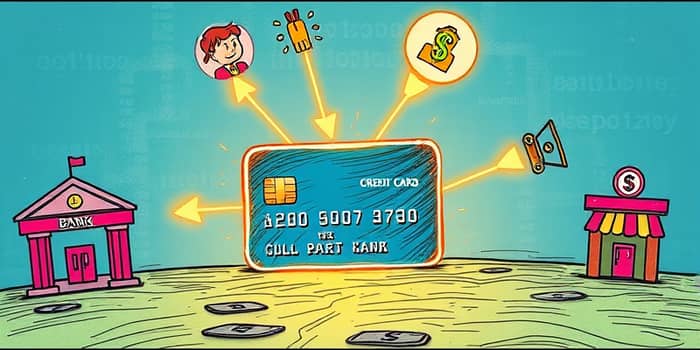
Every time you swipe, tap, or click to pay with plastic, a complex network hums behind the scenes, transforming that single transaction into profit streams flowing to banks, processors, and networks.
At the heart of card payments lies the four-party card scheme model, where four core players intersect.
Every swipe distributes fees among these participants, ensuring each stakeholder earns from the exchange.
Issuers—banks and fintechs—rely on four pillars to generate profit.
First is interchange fees, paid by the acquirer each time you make a purchase. These fees, typically 1%–3% of the transaction, compensate issuers for underwriting risk and fraud prevention.
Second, issuers earn from revolving balances. Known as interest income is the main source for mass-market cards, average APRs hover around 20%. With U.S. credit card balances topping $1.18 trillion in Q1 2025, interest charges drive massive profitability.
Third, cardholder fees add another layer. From annual and late payment fees to cash advance charges and foreign transaction markups, fees often compose up to 15% of issuer profitability. Subprime customers may even generate more fee income than interest.
Fourth, issuers negotiate rebates or incentives with networks. By committing volume, banks secure back rebates on network fees, further boosting margins.
Merchants view card acceptance as essential, but behind the scenes acquirers operate on slim spreads. The merchant service charge (MSC) blends interchange, scheme fees, and acquirer margin into a single rate, often 1.5%–3% of a sale.
Of that, acquirers retain only 10–40 basis points as profit, making payments a low-margin business on pure processing. To offset razor-thin spreads, acquirers upsell value-added services:
These services boost acquirer revenues and differentiate offerings in a crowded market.
Visa, Mastercard, and others monetize the rails that connect issuers and acquirers. Their revenues flow from:
Networks also invest in incentives and rebates to drive volume, recouping those costs through higher transaction fees and expanded market share.
Let’s follow the journey of a simple coffee bought for $100:
The cardholder then owes $100 to the issuer. If paid in full, the issuer pockets the interchange. If the balance revolves—say $50 remains at 20% APR—the issuer earns interest on that $50 over time.
Knowledge of these profit flows empowers you to make smarter decisions. Consider these strategies:
By aligning card choice with your financial behavior, you turn every swipe into an opportunity rather than a cost center.
The next time you tap your card, remember you’re activating a finely tuned ecosystem where issuers, acquirers, and networks each claim a share of fees and interest. Understanding how consumer behavior drives profitability lets you navigate this ecosystem on your terms.
Armed with insight into interchange, interest charges, and fee structures, you can choose cards that reward your habits, avoid pitfalls, and keep more value in your pocket. In the grand scheme of payments, knowledge truly is purchasing power—use it wisely.
References