Search
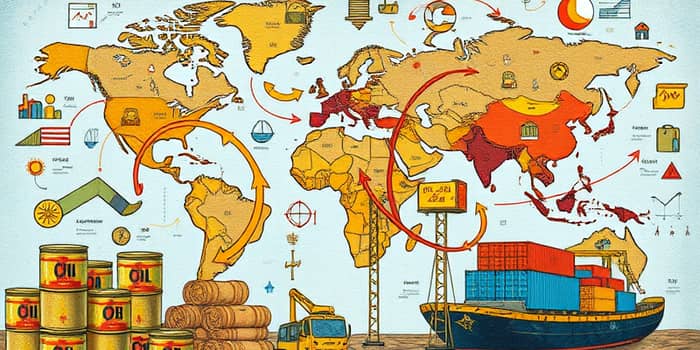
Commodity markets pulse with ever-shifting forces that determine prices for oil, metals, grains and more. Understanding these forces equips investors, producers and policymakers to navigate volatility and seize opportunities in a globally interconnected economy.
Supply in commodity markets hinges on factors ranging from technology breakthroughs to geopolitical tensions. When extraction methods improve or new sources emerge, output rises—and prices can fall. Conversely, disruptions tighten markets and spark rapid price hikes.
Technological innovations such as hydraulic fracturing in natural gas disrupted long-term trends, creating persistent oversupply. Meanwhile, droughts in grain belts can slash production by 20–30% in a single season, sending shockwaves through food markets.
On the demand side, economic cycles, emerging markets and financial dynamics steer consumption patterns. Industrial growth, consumer behavior and monetary policy all contribute to the appetite for raw materials.
Rising incomes in emerging economies fuel infrastructure projects and urbanization, boosting demand for steel, cement and fuel. By contrast, recessions dampen consumption, leading to inventory build-ups and price declines.
Inventories act as a vital buffer in commodity markets, smoothing fluctuations when supply or demand suddenly changes. Stockpiles above long-term averages signal oversupply, while low reserves presage tightening conditions.
Rational storage models show that when inventories are plentiful, prices remain low and stable. However, sudden demand surges or supply cuts deplete reserves, triggering volatility and dramatic spikes.
Commodity prices move through cycles of stability punctuated by sharp shocks. Over the past six decades, demand-driven upheavals have explained roughly 50% of price variance, while supply disruptions account for about 20%.
Asymmetric shock impacts arise because storage dampens supply-side swings more effectively than rapid changes in consumption. A geopolitical cutoff or drought may be buffered temporarily, but a sudden demand surge can exhaust reserves and send prices soaring.
Seasonality and speculative positioning add further twists. Harvest gluts in agriculture depress prices in peak months, while funds and traders amplify trends through momentum and futures contracts, creating larger price moves than fundamentals alone would dictate.
To anticipate market directions, analysts rely on indicators and models that decompose supply and demand factors. Combining hard data with forward-looking measures enhances forecasting accuracy.
By monitoring these metrics, stakeholders can detect emerging trends, manage risk and make informed decisions. For example, rising port congestion and freight rates often foreshadow higher commodity costs downstream.
In an unpredictable environment, resilience and flexibility are key. Diversifying supply sources, hedging exposures through futures contracts, and maintaining strategic reserves help mitigate price swings.
Producers benefit from investing in adaptable technology and infrastructure to ramp production up or down quickly. Buyers and governments can establish buffer stocks or sliding pricing agreements to share risk across the value chain.
The interplay of supply constraints, demand shifts and inventory dynamics creates a complex tapestry that drives commodity prices. By understanding the core principles that govern markets and leveraging data-driven analytical tools, participants can navigate cycles more effectively and capitalize on emerging opportunities.
As global factors from climate events to monetary policy continue to evolve, remaining vigilant and adaptive ensures preparedness for the next market swing. With insight and strategy, stakeholders can transform volatility into advantage and shape resilient commodity portfolios.
References