Search
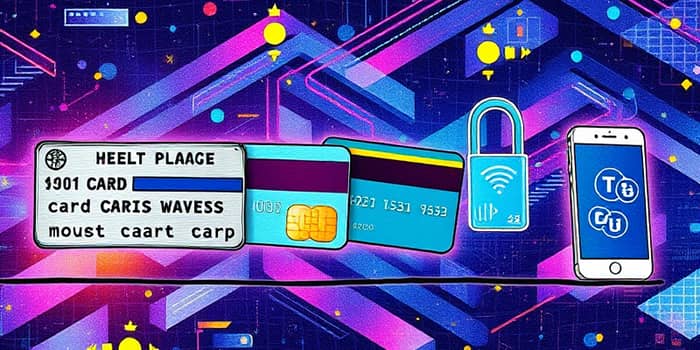
Credit cards have become an integral part of modern commerce, facilitating trillions of dollars in transactions each year. Yet the journey from simple charge accounts to sophisticated digital tokens reflects a constant battle to stay ahead of fraudsters.
In this article, we trace how security features have evolved over eight decades, highlighting key innovations and their impact on consumer protection.
Before modern credit cards, merchants offered charge accounts and tabs, recording purchases manually in ledgers. In the 1930s, department stores introduced the Charga-Plate—an embossed metal plate carrying customer credentials.
Security was minimal: possession of the plate granted full access to credit. The transition to plastic in the 1950s saw the introduction of the Diners Club Card (1950) and BankAmericard (1958), later known as Visa. Yet physical possession plus signature remained the primary fraud control.
Merchants relied on imprint machines to capture raised lettering, and signature strips were meant to confirm a buyer’s authenticity against receipts.
In the late 1960s, an IBM engineer pioneered adding a magnetic stripe to cards, which retailers widely adopted in the 1970s. The stripe stored static card data—account number, expiration date—allowing electronic authorization at points of sale.
Although this marked a step up in fraud protection over manual systems, magnetic stripes held inherently static card data vulnerability. Criminals deployed skimming devices to read and clone stripe information, producing counterfeit cards with nearly all the spending power of the original.
Card security depended not only on features embedded in plastic but also on laws and standards protecting consumers and data handlers.
In December 2004, card brands introduced PCI DSS, establishing a baseline global data security standard. It mandates encryption, access controls, network monitoring, and regular testing for anyone storing or transmitting cardholder information.
In 1996, Europay, Mastercard, and Visa published EMV specifications, ushering in smart cards with embedded microchips. These chips generate dynamic data per transaction by producing unique cryptograms for each purchase.
EMV cards perform mutual authentication with terminals, confirming both the card’s and the network’s legitimacy. This architecture has become the gold standard for in-person authentication, drastically cutting card-present counterfeit fraud.
In October 2015, the U.S. implemented an EMV liability shift: merchants without chip-capable terminals became responsible for fraud losses incurred with counterfeit cards.
The first contactless cards appeared in Korea in 1995, with broader global rollout by 2008. These cards rely on NFC chips to enable secure tap to pay transactions.
Mobile wallets like Apple Pay (2014) leveraged network tokenization, replacing the true PAN with device-specific tokenization mechanisms. Every transaction transmits a device-bound cryptogram, limiting misuse if intercepted.
In 1997, Mastercard introduced the CVV code—three or four digits printed on the card—to bolster card-not-present security. Merchants cannot store these codes, per PCI rules, ensuring only cardholders can provide them.
Issuers and merchants layer in two-factor authentication, sending OTPs via SMS or secure apps to confirm identity. 3-D Secure protocols (such as Verified by Visa or Mastercard SecureCode) add a further authentication step before finalizing online purchases, reducing unauthorized use and chargebacks.
Emerging innovations promise to push security even further. Biometric cards with embedded fingerprint sensors can verify cardholders at the chip level, eliminating reliance on signatures or PINs.
Blockchain research explores decentralized ledgers for tamper-evident audit trails, while artificial intelligence analyzes spending patterns in real time to flag anomalies instantly. Upgraded protocols like EMV 3-D Secure 2.0 streamline authentication while maintaining robust fraud prevention.
From the simple Charga-Plate and embossed numbers to dynamic tokens and AI-powered monitoring, credit card security has undergone profound transformation. By understanding and embracing these features, consumers and merchants alike can transact with greater confidence and peace of mind.
References