Search
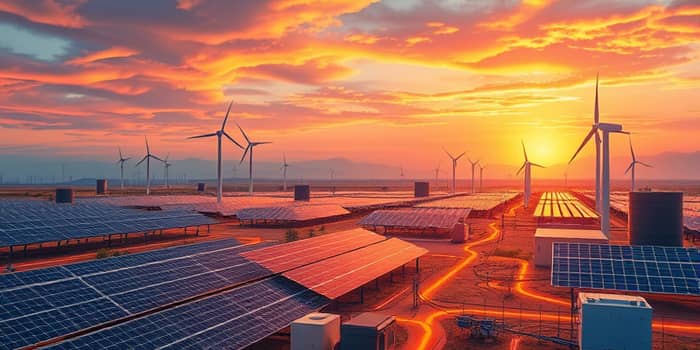
The global energy landscape is undergoing a profound transformation as capital shifts decisively toward low-carbon solutions. In 2025, investors poured an unprecedented multi trillion dollar annual flows into clean energy, marking a pivotal moment in the history of power markets. This wave of funding represents not just financial commitments but a collective belief in a sustainable future driven by innovation, policy support, and societal demand for climate action.
According to leading research, total energy transition investment reached approximately $2.3 trillion in 2025, an 8% increase from the previous year. Of this, around $0.78 trillion targeted renewable generation, highlighting the maturity of this sector. Clean energy investments now account for roughly two-thirds of global energy spending, demonstrating a structural capital shift away from traditional fossil fuels toward low-carbon technologies.
While asset finance for utility-scale solar and onshore wind dipped by 13% in early 2025 due to regional policy headwinds, small-scale solar emerged as a “surprise winner,” underscoring the resilience of decentralized generation. Overall, the sector’s momentum appears sustainable as stakeholders adapt to evolving incentives and economic conditions.
Investors now navigate a complex patchwork of national frameworks that shape project viability and returns. In the United States, policy shifts introduced by the One Big Beautiful Bill Act rolled back key tax credits and imposed new sourcing rules. However, developers secured “safe harbor” provisions and will likely accelerate construction in 2026, fueled by robust demand from data centers and industrial electrification.
Europe, by contrast, benefited from stable long-term targets and mature carbon pricing, attracting capital that might otherwise have remained in North America. Meanwhile, Asia has emerged as the epicenter for new capacity additions, with several markets in the Global South seeing renewables growth outpace overall demand expansion.
Solar energy continues to lead new capacity growth. Utility-scale and rooftop installations combined to attract nearly $450 billion in 2025, with small-scale arrays showing particularly strong resilience. In many regions, new solar projects are cheaper to build and operate than coal, solidifying long-term investor confidence despite intermittent setbacks.
Onshore wind experienced a modest financing decline globally, yet the United States saw a 30% rebound in annual installations, marking the sector’s first growth in four years. Offshore wind pipelines remain robust, especially in Europe and parts of Asia, driven by favorable policies and economies of scale.
Energy storage is another breakthrough: average costs have fallen precipitously, with battery pricing more than halved over the past two years. Global spending on grid-scale storage is expected to exceed $66 billion in 2025, making batteries essential for delivering clean, firm power on demand.
Several key forces underpin this investment boom. Technological advances continue to drive down capital expenses for solar panels, wind turbines, and battery systems. Concurrently, electrification across transport, industry, and buildings is accelerating demand for low-carbon power. Artificial intelligence and data center expansions further amplify the need for reliable renewable supply chains.
Economic viability also remains compelling. Renewable projects benefit from stable operating costs, predictable revenue streams under power purchase agreements, and growing access to green financing. These factors combine to deliver risk-adjusted returns that increasingly outperform conventional energy investments over multi-decade horizons.
Despite the strong tailwinds, investors must manage several risks. Policy volatility can alter project economics rapidly, as seen in shifting tax credits and trade tariffs. Supply chain disruptions, especially for critical minerals and components, may introduce cost spikes and construction delays.
Grid integration challenges persist in markets with high renewable penetration, requiring significant reinforcement and flexible balancing resources. Rising interest rates also increase financing costs, testing the resilience of long-duration project models. Effective risk mitigation demands careful due diligence and flexible contract structures.
Opportunities abound across thematic lenses. Infrastructure investment in transmission and distribution upgrades is rising, enabling wider access to remote renewable resources. Digitalization and smart grid technologies are another frontier, optimizing energy flows and enhancing asset performance.
Storage assets provide uniquely attractive profiles by monetizing arbitrage, capacity, and ancillary services. Meanwhile, emerging sectors like green hydrogen and carbon capture open new avenues for capital deployment. Investors are blending diversified portfolios that balance mature technologies with high-growth innovations.
Institutional investors, pension funds, and sovereign wealth vehicles are increasingly allocating capital to renewables for both financial and environmental returns. Renewable energy infrastructure now offers diversified cash flows, inflation protection, and alignment with global decarbonization goals.
Public markets have also reflected this shift, with renewable-focused equities and green bond issuances reaching record volumes. Sustainable indices have outperformed broader benchmarks in recent years, reinforcing the narrative that environmental stewardship and profitability can go hand in hand.
The future of renewable energy investments is not about whether capital will flow, but about where and how it is deployed. As we advance into 2026 and beyond, investors have the opportunity to shape a resilient, low-carbon energy system that benefits society and the planet. By embracing thoughtful strategies, mitigating risks, and fostering innovation, stakeholders can align financial success with the urgent imperative of climate action.
For corporate leaders and fund managers, stress-testing portfolios against multiple scenarios—including rapid decarbonization pathways and potential policy reversals—will be critical. Engaging with governments and local communities fosters social license and can unlock additional revenue streams through public-private partnerships. Emphasizing transparency, measurement, and reporting will enhance stakeholder trust and drive further inflows of capital into transformative renewable projects.
In this critical decade, the choices we make will determine the pace of decarbonization and the stability of global energy supply. For those ready to seize the moment, the renewable revolution offers both a compelling narrative and an actionable pathway to secure lasting returns while building a cleaner, more equitable world.
References