Search
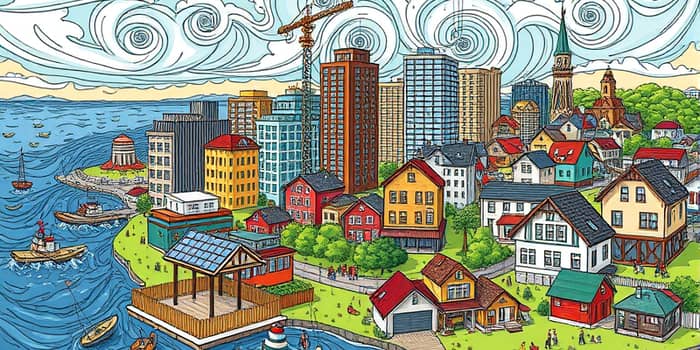
Real estate remains one of the most influential pillars of global wealth, representing trillions in household and national assets. Amid interest-rate shifts, climate threats, and demographic changes, the industry’s ability to adapt has never been more critical. This article explores how and why real estate continues to function as a durable asset in a changing world and outlines practical strategies for investors, developers, and policymakers to foster resilience.
By examining macroeconomic cycles, climate risks, regulatory shifts, and demographic trends, we uncover the mechanisms that allow real estate to endure and even thrive, offering actionable guidance for staying ahead of emerging challenges.
Real estate’s sheer scale—residential markets alone account for nearly $50 trillion in U.S. wealth—means that any shock can ripple through construction, lending, and consumer spending. Yet the sector also serves as a shock transmitter in global cycles, amplifying downturns when stress occurs. Understanding resilience is key to mitigating these shocks and preserving value.
Resilience in real estate spans multiple dimensions:
The macroeconomic outlook for 2026 suggests moderate growth—around 2% GDP expansion—with inflation near 2.5% and a gently cooling labor market. Mortgage rates are forecast to ease from 2024–25 peaks, improving affordability and unlocking pent-up homebuying demand. This sets the stage for a cyclical rebound built on deeper structural resilience.
Commercial real estate investment volumes are projected to climb nearly 16%, reaching pre-pandemic levels as investors chase stable income streams. Across sectors, returns will be consistency of income-driven total returns rather than outsized capital gains, reflecting a mature market environment focused on yield and risk management.
Vacancy rates should gradually decline as leasing activity surpasses 2019 levels, though asset selection and operational efficiency remain critical. The coming cycle will reward those who align portfolios with long-term secular trends rather than simple macro momentum.
With $50 trillion of residential wealth exposed, climate change presents a profound threat. Storm surges, wildfires, and heat waves cause physical asset damage and escalating costs, while insurers pull back from high-risk zones, driving up premiums and undermining mortgage lending.
Migration patterns are shifting as 55 million Americans may relocate within 30 years to avoid risk. Coastal and wildfire-prone markets face falling values, while interior regions such as the Midwest and Northeast emerge as climate refuge destination markets, attracting capital and population growth.
Successfully navigating these challenges requires a multidimensional approach to resilience building. Investors and operators can focus on four strategic pillars:
By focusing on such measures, stakeholders can secure lower operating costs, enhanced tenant loyalty, and access to financing with favorable terms. This proactive stance turns compliance burdens into competitive advantages.
As we move into 2026 and beyond, real estate’s resilience will hinge on strategic foresight and collaborative action. Government, investors, developers, and communities must work together to fund retrofits, share climate data, and incentivize sustainable development.
Ultimately, resilience is not optional. By embedding risk mitigation into core decision-making—through sustainable retrofit and technology adoption—the industry can safeguard trillions in wealth, protect communities, and deliver steady returns in an unpredictable world. Embracing this challenge today lays the groundwork for a more secure, equitable, and prosperous real estate landscape tomorrow.
References