Search
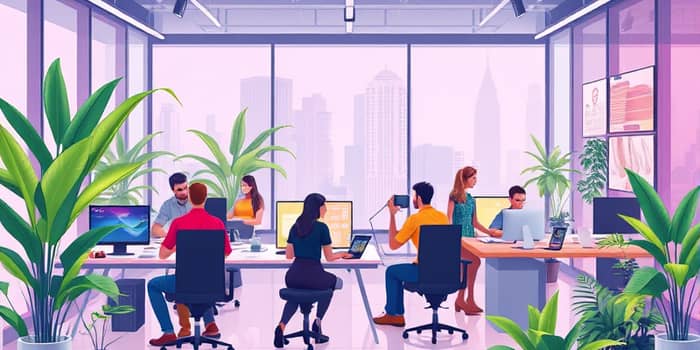
As we approach 2026, workplaces are undergoing rapid transformation driven by technology, shifting expectations, and economic realities. This article explores how organizations and employees can thrive by embracing new models, integrating advanced tools, and prioritizing human well-being.
Hybrid work is no longer an experiment—it’s the foundation for modern organizations. Companies are designing schedules that blend on-site collaboration with remote flexibility, ensuring teams enjoy both connection and autonomy.
Clear expectations, shared hours, and transparent workflows are essential for cohesive hybrid operations. Recent data shows that around 40% of employees work remotely in some capacity, 27% operate in hybrid setups, and 12% are fully remote.
Generative AI will be in production at 80% of enterprises by 2026, reshaping tasks from data analysis to code generation. Rather than replacing humans, AI acts as a teammate that handles routine processes, freeing people for strategic and creative work.
Organizations must develop robust governance to manage AI risks—only 26% of leaders feel confident in their current frameworks. By piloting responsible automation projects, companies can build trust and scale adoption effectively.
With automation reshaping roles, there’s a critical shift to a skills-based workforce. Employers and individuals must invest in continuous learning to stay relevant and competitive.
According to the World Economic Forum, 1 billion workers will need reskilling by 2027. Entry-level positions are being redesigned into apprenticeship models that combine foundational skills with AI oversight.
Only 21% of employees report high engagement globally, underscoring the need for a human-centric approach focusing on wellbeing. Organizations that foster psychological safety, mental health support, and work–life integration drive innovation and loyalty.
Crucial skills such as critical thinking, creativity, adaptability, and resilience enable teams to navigate uncertainty. By funding DEI initiatives and ensuring equitable access to development, companies unlock diverse perspectives that fuel growth.
The shift to flexible work has profound economic consequences. Firms save roughly $11,000 per remote worker annually in overhead, while employees save about $4,000 on commuting. Yet urban centers like San Francisco face revenue shortfalls—losing nearly $2.9 billion due to reduced foot traffic.
Real estate valuations could drop by $1.3 trillion globally by 2030 as demand for traditional office space declines. At the same time, smaller cities and rural areas benefit from an influx of remote-capable talent, boosting local economies and redistributing purchasing power.
Decentralizes the workforce and accelerates digital infrastructure investments, from cloud solutions to cybersecurity enhancements. Governments and firms must collaborate to expand high-speed connectivity and support this new geography of work.
Success in 2026 hinges on embracing outcome-based and skills-centric workforce design. Leaders should move beyond rigid job descriptions to flexibly allocate talent where it creates the greatest value.
Middle managers play a pivotal role by coaching teams, ensuring alignment, and facilitating cross-functional collaboration. When organizations trust their people and empower them with the right tools, productivity and engagement rise in tandem.
As economic headwinds slow growth, the companies that outpace peers will be those who combine technological sophistication with deep human empathy. By nurturing a culture of continuous learning, prioritizing wellbeing, and boldly experimenting with hybrid and AI-driven models, organizations can chart a path toward sustainable success.
Looking ahead, the future of work will be defined not by where we work, but by how we work together—leveraging the best of human ingenuity and artificial intelligence to solve complex challenges and create richer, more fulfilling careers.
References