Search
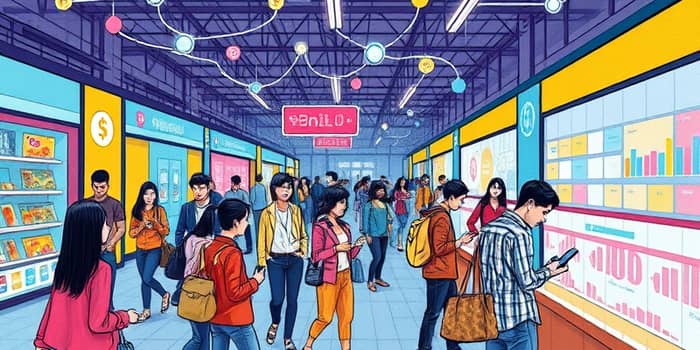
As the economy transitions into 2025 and beyond, businesses and individuals alike face a complex mosaic of challenges and opportunities. While overall consumer spending growth is set to moderate after a strong 2024, deeper analysis reveals pockets of resilience and innovation that can inform strategic decisions. By understanding the nuanced shifts in spending behavior, companies can adapt their offerings, and consumers can make more empowered choices.
With forecasts indicating a slowdown to between 2.3% and 3.7% growth in 2025 and a steady 2.9% in 2026, it might be tempting to brace for retreat. Yet, beneath headline figures lies resilience in spending capacity supported by wealth gains, rising tax refunds, and a stabilizing labor market.
The coming two years will test consumer confidence amid inflation pressures, tariffs, and economic uncertainty. Despite these headwinds, inflation-adjusted spending is projected to climb 2.7% in 2025 and 2.8% in 2026, nearly matching each other. Early data for 2025 underscores this tenacity: Q1 spending surged 5.5% year-over-year, retail sales held steady in April, and February 2026 personal consumption expenditures grew by 0.5%.
These figures reflect easier financial conditions and wealth gains that bolster households, even as K-shaped dynamics widen gaps between income groups. Consumer confidence remains stable at six-year highs, driven by improved savings outlooks and the ability to cover essential payments.
Examining where dollars flow reveals divergent patterns between necessities and luxuries, as well as new frontiers in digital commerce and experiences.
As shown above, travel and experiences continue to outpace traditional goods, spurred by major events like the FIFA World Cup 2026 and a hunger for experience-driven travel and dining. Meanwhile, essentials hold steady even as consumers search for deals, and ecommerce steadily gains share amid evolving online behaviors.
The so-called K-shaped recovery highlights diverging fortunes. High-income households reap most benefits from tax cuts, while lower-income groups feel pinch from program reductions. This disparity influences spending patterns and brand loyalty.
Technology is reshaping discovery and purchase journeys. Artificial intelligence and social commerce drive new levels of engagement, influencing both research and transactions.
Looking ahead, businesses must navigate a landscape defined by inflation, evolving consumer values, and technological change. Understanding these forces can unlock growth even amid caution.
To thrive, organizations should combine data-driven strategies with empathetic engagement, tailoring offers to diverse segments and embracing flexible, omnichannel experiences. For consumers, awareness of these trends can guide smarter budgeting and intentional spending that aligns with personal values and financial realities.
In a world where uncertainty and opportunity coexist, the businesses that listen, learn, and innovate will capture the hearts and wallets of tomorrow’s shoppers. By harnessing insights into evolving spending patterns—whether capitalizing on the rebound in experiences or meeting the demand for value and technology-driven convenience—stakeholders can forge paths to sustainable growth.
References